Ingredients
Equipment
Method
- Instruction 1:
- Rinse the beef tongue thoroughly under cold running water, paying attention to any crevices. Pat it completely dry with paper towels. If you notice any obvious bits of fat, glands, or connective tissue at the thick end (the base), trim these away with your chef's knife, but don't worry about being too precise—most of it will cook down.
- Instruction 2:
- Place the quartered onion, smashed garlic cloves, bay leaves, whole black peppercorns, dried oregano, and cumin seeds directly into the bottom of your 6-8 quart slow cooker. Think of this as building a flavorful bed for the tongue to rest on—these aromatics will infuse the braising liquid, which then penetrates deep into the meat over those long hours of cooking.
- Instruction 3:
- Nestle the prepared tongue into the slow cooker on top of the aromatics. Pour in the beef broth and apple cider vinegar. Add enough cold water to just cover the tongue completely—it should be fully submerged, almost swimming in liquid. Sprinkle the tablespoon of salt evenly over the top. Don't worry about seasoning the tongue directly at this stage; the salt will work its way into the meat as it cooks.
- Instruction 4:
- Cover the slow cooker with its lid and set it to LOW. Cook for 8-10 hours without opening the lid (every peek releases heat and adds cooking time). You'll know the tongue is done when a fork slides easily into the thickest part with almost no resistance—it should feel tender but still hold its shape, not falling apart. If you only have 6-7 hours available, you can switch to HIGH for the last 1-2 hours, but the low and slow method produces the most even tenderness throughout.
- Instruction 5:
- Using sturdy kitchen tongs, carefully transfer the cooked tongue to a large mixing bowl. Be gentle but confident—it's hot but won't fall apart if you grip it firmly at the middle. You can strain and reserve the cooking liquid at this point if you want to use it for soup or sauce later (it's incredibly rich and flavorful). Pour cold water and several handfuls of ice cubes over the tongue until it's covered. Let it sit in this ice bath for 15-20 minutes until it's cool enough to handle comfortably. This cooling step isn't just about safety—it actually makes the peeling process much, much easier.
- Instruction 6:
- Now for the peeling, which sounds intimidating but gets easier with practice. Using your paring knife, make a shallow lengthwise cut along the top of the tongue from the tip all the way to the base—you're just cutting through that tough outer skin layer, not into the pink meat underneath. Then, using your fingers and the knife to help lift edges as needed, peel away the skin in sections. It should come off in large pieces, almost like peeling a hard-boiled egg. The first time took me 20 minutes; by my third tongue, I had it down to 5. Don't stress if tiny bits of skin remain in the deep crevices—you can trim those spots away or just leave them.
- Instruction 7:
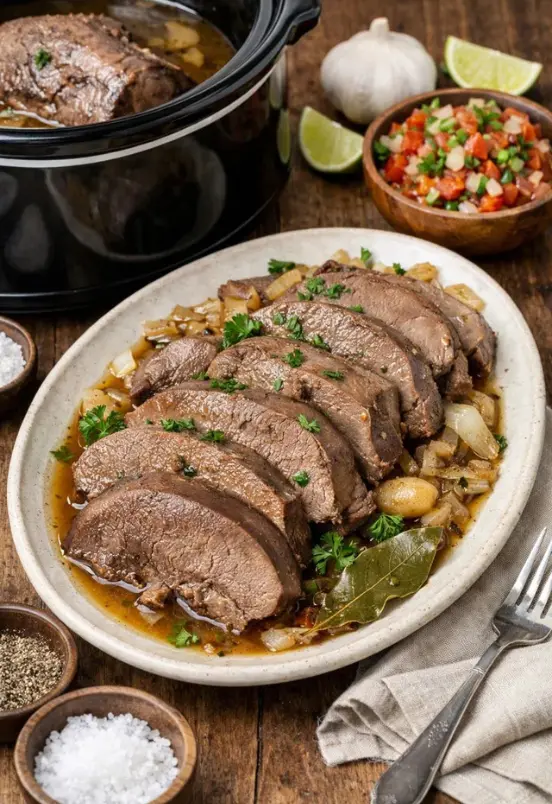
- Once the tongue is completely peeled, place it on your large cutting board and let it rest for about 5 minutes. This brief rest helps the juices redistribute. Look at the tongue and identify the grain—it runs lengthwise from tip to base. Using your sharp chef's knife, slice the tongue crosswise (perpendicular to the grain) into ¼-inch thick slices. You'll see a beautiful, tender grain structure in each slice—that's exactly what you're looking for. Serve immediately while warm, or see the storage notes for make-ahead options.
Notes
Beef tongue is surprisingly nutritious—packed with protein, vitamin B12 (nearly half your daily value per serving), iron, and zinc. While it contains more fat than ultra-lean cuts, much of it is monounsaturated fat, the same heart-healthy type found in olive oil and avocados.
The nutrition facts above are based on a 4-5 ounce serving (⅛ of the whole tongue). If you're making tacos, you'll likely use 2-3 ounces per person, which cuts these numbers roughly in half. The values include only the cooked tongue meat—not tortillas, toppings, or any accompaniments.
Want to reduce fat? You can trim visible fat from the cooked, peeled tongue before slicing, which drops the fat content by about 20-30%. I usually don't bother—I'd rather enjoy a smaller portion of the full-flavored version. The rich taste means most people feel satisfied with less, especially when paired with fresh vegetables or in tacos with all the fixings.