
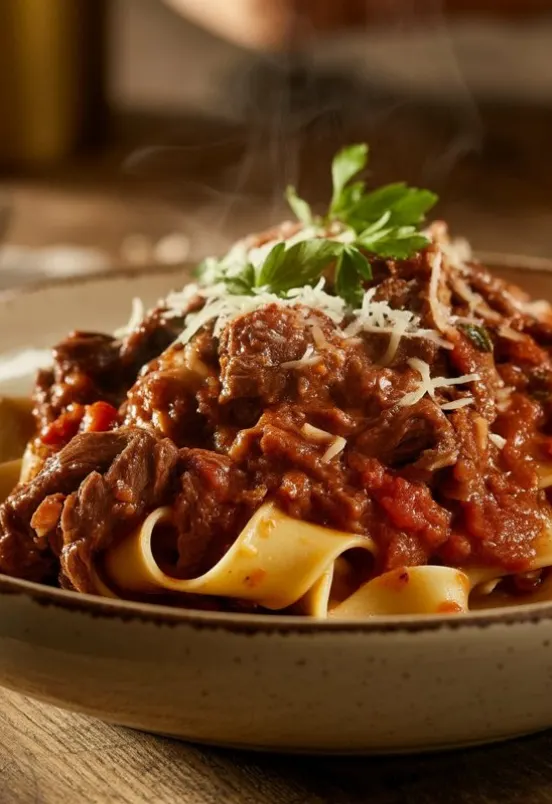
Expert Tips for the Best Beef Ragu
- 1. Use high-quality chuck roast for the best fat content
- 2. Brown the meat first to lock in flavor
- 3. Let it cook on LOW for 8 hours
Slow Cooker Beef Ragu: A Hearty Sauce for Pasta Night
Ingredients
Equipment
Method
-
Step 1: Brown the Beef (Don't Skip This!)
-
Pat the beef chunks completely dry with paper towels—moisture is the enemy of a good sear. Season generously with salt and pepper. Heat 1 tablespoon olive oil in your skillet over medium-high heat until it’s shimmering. Working in two batches (overcrowding = steaming = no crust), brown the beef on at least two sides, about 3-4 minutes per side. You want deep golden-brown color. Transfer browned beef to your slow cooker.
-
Timing: 10-12 minutes total
-
Step 2: Build the Soffritto
-
In the same skillet (don’t wipe it out—all those browned bits are flavor gold), add the remaining tablespoon of olive oil. Reduce heat to medium and add the onion, carrots, and celery. Cook, stirring occasionally and scraping up those browned bits, until the vegetables are softened, about 6-7 minutes. Add the garlic and cook for another minute until fragrant.
-
Tip: This soffritto (the Italian holy trinity of aromatic vegetables) is the backbone of the sauce. Take your time with it. If the pan looks too dry, add a splash of water to help release those stuck-on bits.
-
Timing: 7-8 minutes
-
Step 3: Add Tomato Paste and Wine
-
Clear a spot in the center of your pan and add the tomato paste. Let it cook for about 2 minutes, stirring occasionally—this caramelizes the paste and deepens its flavor. Pour in the wine and turn the heat up to medium-high. Let it bubble enthusiastically for 3-4 minutes, scraping the bottom of the pan. The alcohol needs to cook off and the wine should reduce by about half.
-
Timing: 5-6 minutes
-
Step 4: Into the Slow Cooker
-
Transfer the vegetable-wine mixture to your slow cooker with the beef. Add both cans of tomatoes, beef stock, bay leaves, rosemary, thyme, oregano, salt, pepper, and red pepper flakes if using. Stir everything together gently—you want the beef chunks mostly submerged but they don’t need to be swimming.
-
Timing: 2 minutes
-
Step 5: Slow Cook to Perfection
-
Cover and cook on LOW for 8-9 hours or HIGH for 5-6 hours. You’ll know it’s ready when the beef shreds easily with a fork and the sauce has thickened and darkened to a rich, deep red-brown. About 30 minutes before serving, remove the bay leaves and use two forks (or a potato masher) to break up the beef chunks into shreds right in the slow cooker. Stir in the heavy cream—this adds a luxurious silkiness.
-
Visual Cue: The fat from the beef will pool on top during cooking. You can skim it off if you want, but I usually just stir it back in because that’s where a lot of the flavor lives. The sauce should be thick enough to coat a spoon but not gloopy.
-
Timing: 8-9 hours on low, or 5-6 hours on high
-
Step 6: Taste and Adjust
-
This is your moment to make it perfect. Taste the ragu and add more salt if needed (I usually add another half teaspoon at this point). If it tastes too acidic, a pinch of sugar helps. If it seems too thick, add a splash of pasta water or stock. Too thin? Let it cook uncovered on high for 20-30 minutes to reduce further.
-
Timing: 2-3 minutes
-
Step 7: Serve with Love
-
Toss the ragu with your cooked pasta of choice (pappardelle is traditional, but rigatoni, fettuccine, or even gnocchi are fantastic). Don’t just plop sauce on top—mix it together with a little pasta cooking water to help everything cling. Serve with fresh basil, grated Parmesan, and maybe a drizzle of good olive oil.
-
Serving Suggestion: I always put extra Parmesan and red pepper flakes on the table. David likes his spicy; Emma likes hers buried in cheese. Everyone’s happy.
Notes
Wine Substitute: If you don’t have wine or prefer not to use it, substitute with an additional cup of beef stock plus 1 tablespoon balsamic vinegar.
Vegetable Boost: Some cooks add mushrooms for extra umami. I’ve diced 8 ounces of cremini mushrooms and added them with the soffritto—it’s delicious.
Pork Addition: For a more complex flavor, use 1½ pounds beef chuck and 1 pound ground pork. Brown the pork with the vegetables in step 2.
Spice It Up: Double the red pepper flakes or add a diced Calabrian chili pepper for authentic Southern Italian heat.
Slow Cooker Size: This works in a 5-quart slow cooker if that’s what you have, but a 6-quart gives you more room and makes stirring easier.
Nutrition Information
Serving Size: 1 cup ragu (without pasta)
Servings: 8
- Calories: 340
- Protein: 32g
- Carbohydrates: 11g
- Fat: 18g
- Saturated Fat: 7g
- Fiber: 3g
- Sugar: 6g
- Sodium: 580mg
Note: Nutrition information is approximate and doesn’t include pasta or toppings.
Frequently Asked Questions
Can I use a different cut of beef?
Yes! While chuck roast is ideal because it breaks down beautifully, you can also use beef shanks or even short ribs. Just ensure they are well-marbled.
Do I have to brown the beef first?
While you can skip it, browning the beef adds a deep, savory flavor (thanks to the Maillard reaction) that you can’t get any other way. We highly recommend it!
Can I make this on the stovetop?
Absolutely. Follow the same steps in a Dutch oven, then simmer on very low heat for 3-4 hours until the beef is fork-tender.
Leave a Review & Comment
Did you make this recipe? Share your thoughts, ratings, and kitchen tips with our community!
Thank You for Your Review!
Your comment has been submitted and is awaiting approval.
Community Reader Reviews (3)
Emily R.
★★★★★Made this for dinner last night and my whole family devoured it! The flavor was so deep and rich. Definitely adding this to our monthly meal rotation.
Marcus Vance
★★★★★Amanda's instructions were spot on. The tip about searing first really locked in all the juices. 10/10 recipe!